

Pillar of Excellence: Global Health

At Georgetown University Medical Center, our commitment to advancing global health reflects our deepest values as a Jesuit institution: accompaniment, justice, and service. These values are the bedrock of our educational programs and research centers, enabling us to develop ethically grounded global health leaders and share our expertise with compassion and humility.

We promote health and human dignity by empowering global health leaders—working in true partnership with nations and communities to strengthen their health systems.”
— Norman J. Beauchamp Jr., MD, MHS, Executive Vice President for Health Sciences, Executive Dean of the School of Medicine, Georgetown University Medical Center

Norman Beauchamp

A Global University in the Nation’s Capital

As a global university located in Washington, D.C., we attract internationally recognized experts in health security, infectious disease, health care reform, and global health policy — reflecting our ability to drive solutions that extend across disciplines and borders.

Our Strategic Goals

As society’s health challenges grow increasingly complex, GUMC’s unique identity and emphasis on service and partnership are differentiators. We will improve outcomes sustainably — ensuring communities with the greatest needs have the resources and capacity to thrive. We will advance three strategic goals to realize this vision.
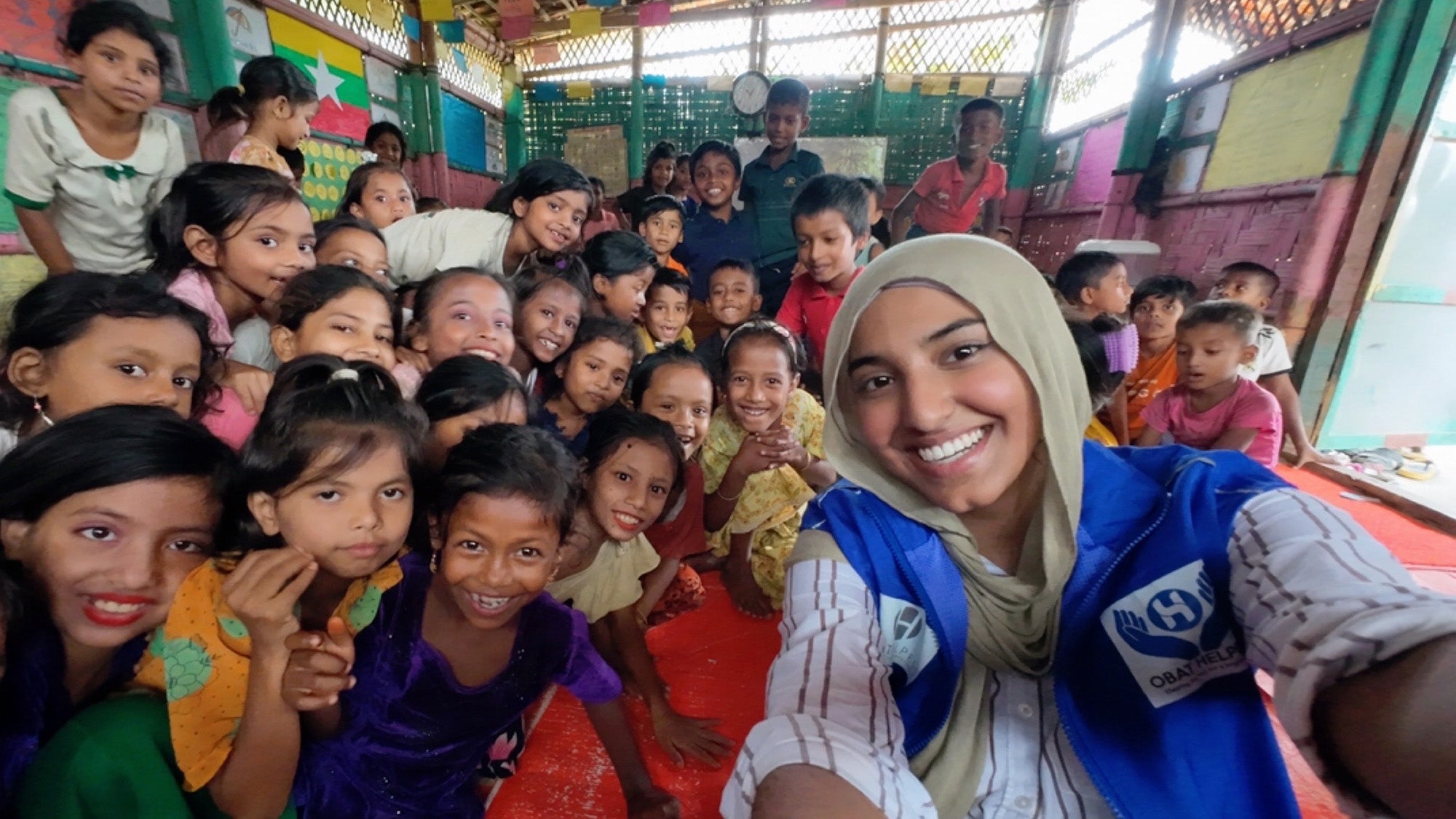
School of Health student Isra Satiar takes a selfie with children in the Rohingya refugee camp

Educate New Global Health Leaders

We will educate the next generation of talented global health leaders who improve health outcomes in communities around the world, serving as “people for others” with compassion and cultural humility.

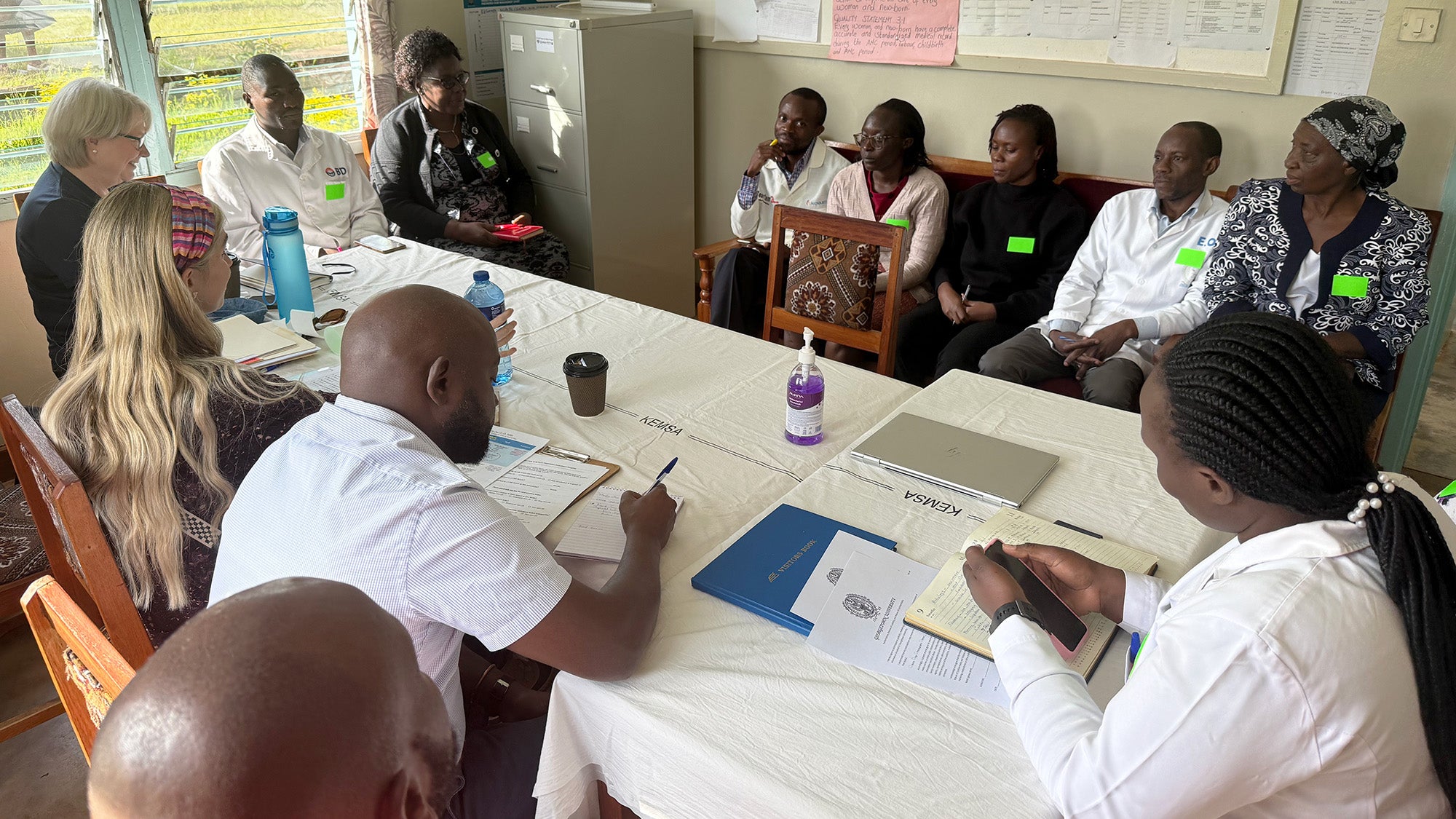
A PhD student from the BSON participates in a meeting in Kenya

Advance Interdisciplinary Research

We will advance groundbreaking research across disciplines, positioning our world-renowned scholars to shape policy and practice through the dissemination of new evidence and knowledge.

Two individuals shake hands while two others look on

Expand Collaborative Relationships

We will expand collaborative relationships in communities worldwide, empowering leaders across organizations and sectors to catalyze sustainable solutions to pressing health challenges.

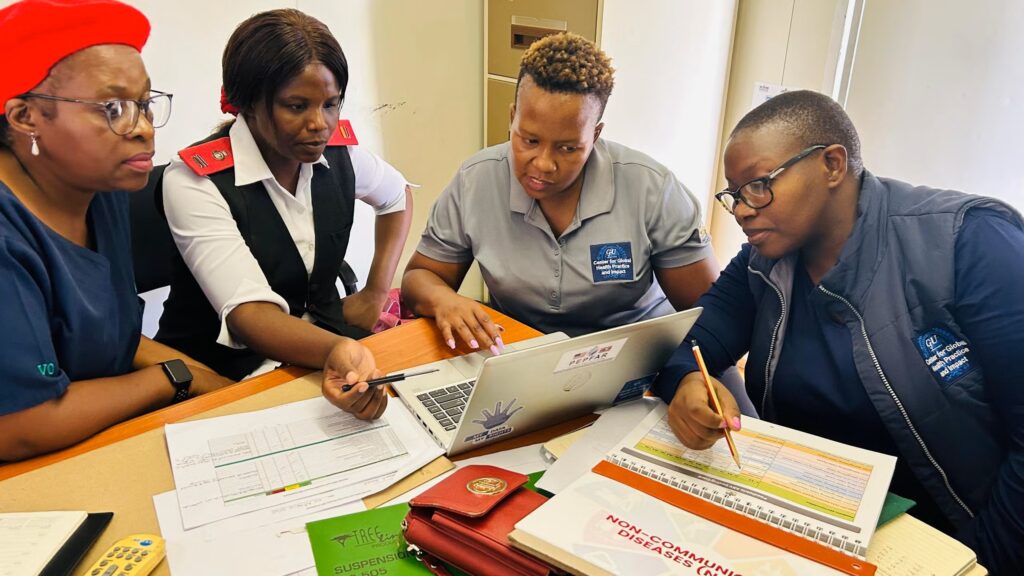
Four people sit at a table during the meeting to develop the post-SIMS action plan in Lubombo Gilgal

Global Health Pillar of Excellence: Commitment in Motion

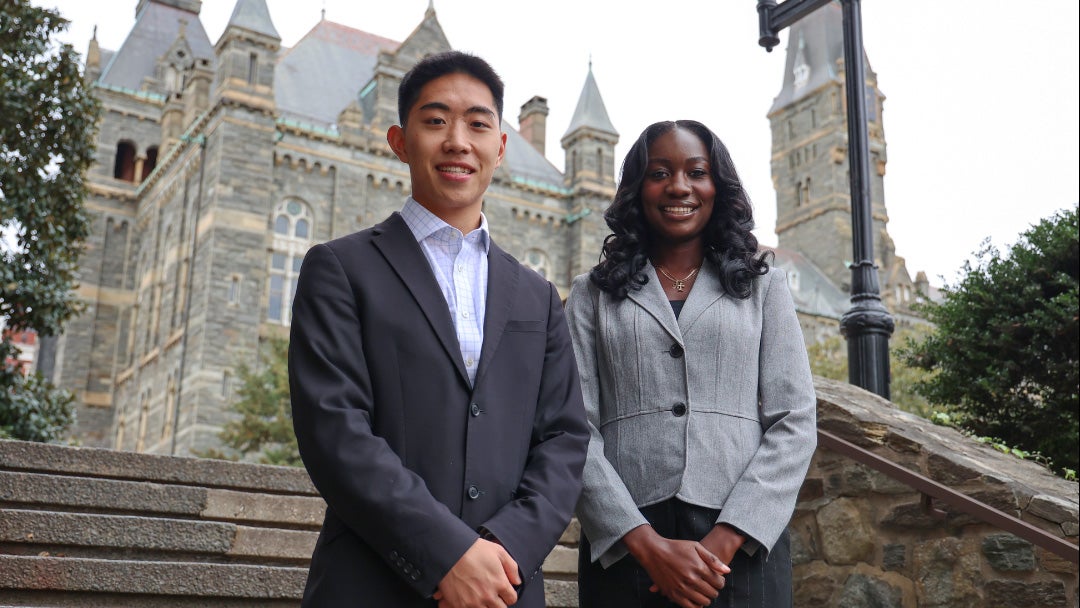
Two individuals stand on the steps outside Healy Hall

Education
Global Health Fellows Program

The Maeve Kennedy McKean Global Health Award provides undergraduate students with funding to develop research projects that address a pressing global health and human rights issue. Awardees become part of the Global Health Fellows Program and spend the summer before their senior year conducting international fieldwork.

Jordan Pai (H’27) and Kayla Wontumi (H’27) (left to right), the 2025-2026 award recipients, focused their projects on health equity and maternal health issues in Africa and received mentorship from faculty in the Walsh School of Foreign Service and Berkley School of Nursing.

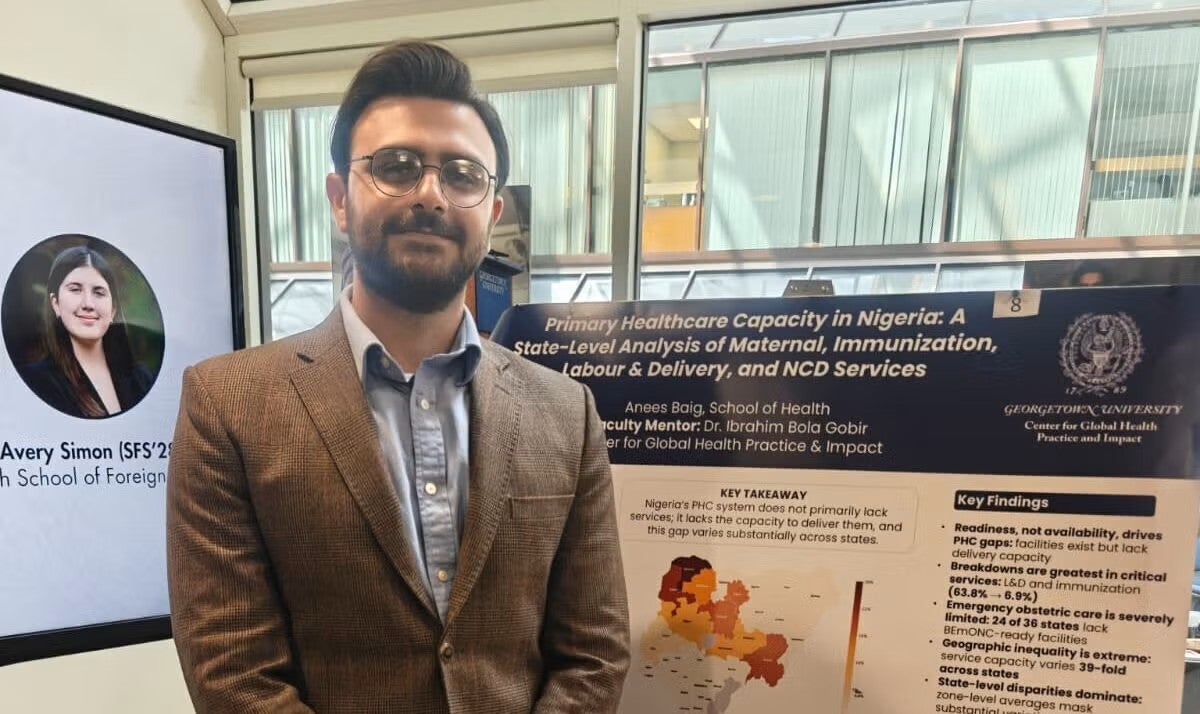
Four individuals sit at a table

Discovery
Advancing Interdisciplinarity at the Global Health Institute

The Georgetown University Global Health Institute (GUGHI) advances global health education, research, and practice by harnessing our interdisciplinary strengths and leadership as a global convener located in Washington, D.C.

GUGHI is the first academic collaborating center for the African Union Development Agency-New Partnership for Africa’s Development, enabling us to support local leaders, strengthen health systems, and build capacity across the continent. Our approach to this work is guided by our core commitment as a Jesuit institution — to deliver knowledge in service to the common good.

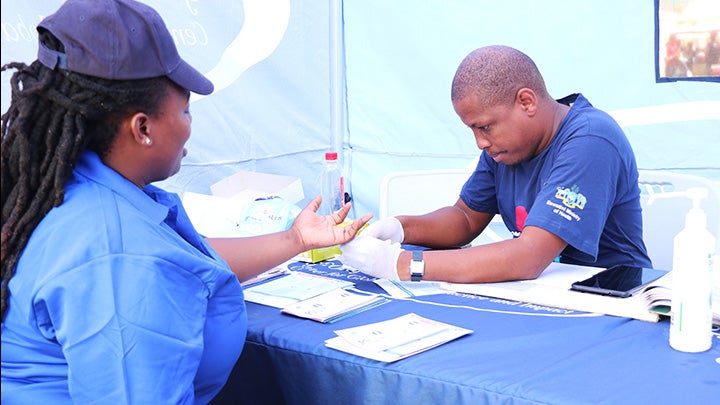
A worker gets her blood drawn by a worker at a table

Community
Enhancing HIV Prevention & Care

The Georgetown University Center for Global Health Practice and Impact’s (CGHPI) mission is to improve health outcomes by generating and translating scientific evidence into policy and practice. With headquarters in Washington, D.C., CGHPI operates in over 12 countries, including Tanzania, Botswana, Eswatini and Haiti, and partners with governments, foundations, public health agencies, and community organizations.

Since 2020, CGHPI’s team in Eswatini has helped over 280,000 people learn their HIV status, identifying over 10,000 individuals living with HIV and linking them to treatment.