

Haitian-Focused Foundation Selects Georgetown to Support Youth HIV Programs
Posted in GUMC Stories | Tagged AIDS, Center for Global Health Practice and Impact, cura personalis, global health, Haiti, HIV, sustainability
(September 25, 2025) — In recognition of Georgetown’s Center for Global Health Practice and Impact’s vast experience working with HIV-infected youth in Haiti, Friends of Cité Soleil has awarded the center a $200,000 grant to establish a new initiative to help more young people with HIV in Haiti thrive.
The two-year Y-LEAF (Youth-led Eco Action for the Future) initiative aims to promote economic empowerment and boost entrepreneurship among Haitian youths.
Y-LEAF will be implemented in partnership with Foyer Lakay des Jeunes (FOLAJ+), a Haiti-based youth organization that Georgetown has worked with as part of its broader HIV response coalition. The initiative aims to support approximately 150 young people between the ages of 15-30 who are living with or affected by HIV by providing vocational training, fostering social entrepreneurship, and launching microenterprises that create eco-friendly products.
This investment comes as crucial validation for Georgetown’s people-centered approach during one of Haiti’s most challenging periods. Gang violence has displaced nearly 250,000 people from their homes and forced health facilities to close, making access to lifesaving HIV treatment increasingly difficult for vulnerable populations. In August, the government declared a three-month state of emergency in an effort to enable law enforcement to manage the crisis.

“The fact that Friends of Cité Soleil is looking to invest in our work because they see what we do as valuable and responsive to the needs of the communities is a tremendous vote of confidence at a difficult time,” said Babatunji Oni, MD (MBBS), MBA, MSc-PH, senior program director at the Center for Global Health Practice and Impact.
In the face of ongoing logistical challenges and safety concerns, Georgetown has maintained a consistent presence in Haiti since 2019, working closely with the Ministry of Health, treatment facilities, clients, community leaders, pharmacies and clinics to ensure people living with HIV/AIDS can continue to access their medications how and where they want — and improve overall retention in care.
This work has been carried out under Georgetown’s TIDE project (Translating Data into Evidence), funded by the U.S. Centers for Disease Control and Prevention. Through TIDE, the center has made great strides in identifying and addressing barriers to care while maintaining its community-centered approach.
This new foundation funding “sends a powerful message to other local organizations about the importance of being part of building solutions in their own countries,” Oni said. “They are investing in us because they know what we do works locally.”
From Business Partnership to Philanthropy
Georgetown’s partnership with the Friends of Cité Soleil Foundation grew out of a critical business relationship that began nearly five years ago, when the university contracted with pharmacies owned by foundation president Kathleen Weckering to serve as community drug dispensing points (DDPs) for clients to more easily access their antiretroviral medications. The DDP program has been a lifeline for clients and a true success story coming out of TIDE, in that it has helped keep people on their medications even as gang violence has forced health facilities to close.
When funding cuts threatened global health programs this year, the foundation saw an opportunity to offer financial support to the center.
“Shifting from philanthropy to sustainable business partnerships is key to Haiti’s future,” Weckering said. “Billions of dollars in aid have flowed into Haiti over the past 60 years, yet the community still struggles. I believe we must invest in our young people through business opportunities, not just aid, empowering them as shareholders in their own projects for long-term success.”
The grant sits squarely at the intersection of Georgetown’s work with youth organizations in the HIV/AIDS space and Friends of Cité Soleil’s interest in youth empowerment.
“That’s what I love about this partnership — it’s a win-win situation,” said Nancy Rachel Labbe Coq, MD, MSc, country program director for the Georgetown Center’s Haiti team. “We want to capacitate young people, and the foundation also brings business expertise to ensure that there is a market for what young people who are trained through this program will be making and selling. This is true sustainability.”
Building Life Skills
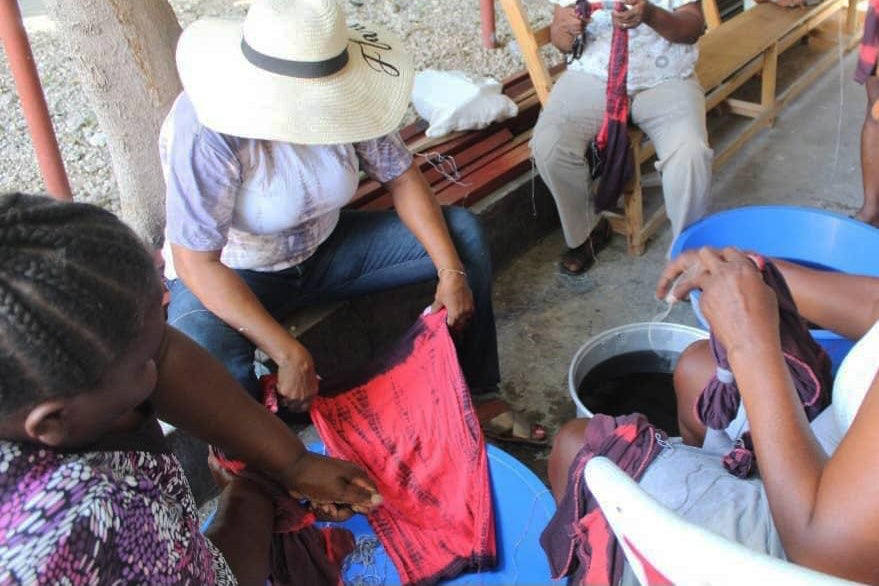
The Y-LEAF program tackles interconnected challenges facing Haiti’s youth living with or affected by HIV. Beyond improving retention in HIV care, the initiative will help young people develop independence and life skills while addressing environmental concerns.
“With the youth, not only do we want to address retention, but also to empower them so they can be independent and develop skills that can help them take care of themselves,” Labbe Coq said.
In addition to teaching business and life skills, the program’s green component will train participants to create sustainable alternatives to widely used plastic products, such as biodegradable bags to replace cellophane bags common throughout Haiti.
For Georgetown’s team, this partnership represents something larger than a single grant — it’s a model for how communities can take ownership of their health challenges. At a time when many international organizations are withdrawing from Haiti due to security concerns, Friends of Cité Soleil’s investment demonstrates that local solutions and partnerships can fill critical gaps.
“This shows that Haitians are not waiting for outside help,” Labbe Coq said. “They’re taking responsibility for their own problems and creating hope for their youth and their country’s future.”